Pristine Laser Restoration provides laser cleaning for fire and smoke damage remediation on metal surfaces, structural steel, wood beams, brick, and stone. We work as a specialty subcontractor alongside restoration companies, providing precision soot and char removal on surfaces where traditional methods create secondary damage or cannot reach the required level of clean. We coordinate with insurance adjusters and restoration project managers to document the scope, process, and results. We serve the four-state region of Missouri, Kansas, Oklahoma, and Arkansas.
Fire & Smoke Damage
Fire Destroyed It. Light Restores It.
Specialty laser cleaning for fire and smoke damage remediation. We remove soot and smoke residue from structural steel, wood beams, brick, stone, millwork, and metal surfaces. No chemicals. No water. No abrasive impact.
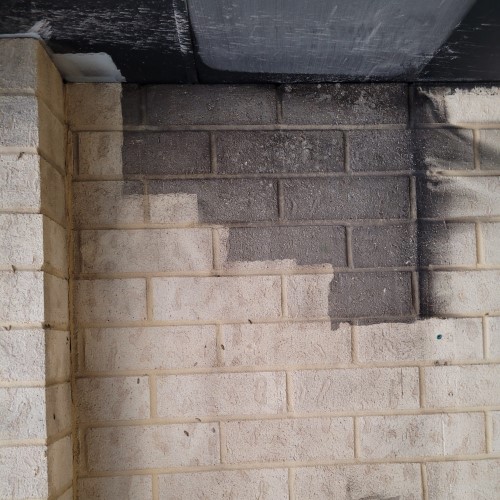
White painted brick after smoke damage. Soot removed. Paint preserved. No abrasive impact, no residue.

Wood beam after a fire. Soot gone, original timber kept. No demo, no chemicals, no smell.
WHY LASER CLEANING FITS FIRE AND SMOKE DAMAGE
A Precision Tool for the Surfaces That Need It Most
Dry Process
The whole process is dry. No water, no chemical solutions, no consumable media, no residue. The only thing leaving the surface is the contamination, captured by the extractor. That keeps the work zone clean and keeps the surface ready for whatever the restoration team does next.
No Secondary Mess
The laser releases the contamination from the surface, and the extractor captures it at the source. No spent media on the floor, no chemical residue to neutralize, no downstream cleanup before the next trade can get to work.
Preserves Original Material
Exposed timber beams, ornamental ironwork, historic masonry, and architectural details can be cleaned without altering the surface texture or character. For insurance documentation, the material is preserved in its original form with only the contamination removed.
Documentable Process
We document the surfaces cleaned, the method statement, and before and after conditions. This documentation integrates with your insurance claim file and supports the restoration scope of work.
Stays In Scope
We coordinate with whoever runs the project. We show up for the surfaces in our scope, do the work, document it, and clear out. We don't expand into other parts of the job, and we don't compete with the GC when there's one running it.
Selective Cleaning
The laser targets specific surfaces and contamination types without affecting surrounding areas. In a fire-damaged space where some surfaces need aggressive remediation and others need delicate treatment, the laser parameters adjust for each situation without switching equipment or methods.
WHO CALLS
Three Calls We Get After a Fire
Restoration Companies
You manage the project. We show up as a specialty subcontractor for the surfaces where laser cleaning produces a better result than soda, dry ice, or hand cleaning. Historic masonry, exposed beams, ornamental detail, structural steel. We coordinate with your project schedule, do the work in our scope, and document the result.
Property Managers and Commercial Owners
You don't always have a restoration GC, and not every event needs one. Soot on a brick or stone exterior after a fire next door. Smoke residue on structural steel or exposed beams after a contained kitchen fire. Furnace puffback or fireplace backdraft that coats a masonry chimney, fireplace surround, exposed brick, or stone facing in oily soot. Architectural metal or ornamental detail covered in smoke residue. We work direct, scope the job, and hand you photo documentation for your records or insurance carrier.
Insurance Adjusters and Claims Professionals
You need a clear scope, a defensible method, and documentation that doesn't introduce new questions to a damaged structure. We deliver written scope of work, before-and-after photos with consistent framing, a plain-English method statement, and a final report that integrates with your claim file. We'll tell you when laser cleaning is the right call for a specific surface and when it isn't.
HOW IT COMPARES
The Cleaning Method Matters When the Structure Is Already Compromised
After a fire, the structure is weakened, saturated, and fragile in ways that aren't always visible. The cleaning method matters. We work alongside your restoration team as a specialty subcontractor, or direct with property managers, owners, and adjusters when there's no GC running the project. Either way, we handle the surfaces where laser cleaning produces a better result, and we tell you honestly when another method is the better call.
Where laser cleaning produces a better result
Porous and textured surfaces such as historic brick, stone, and carved detail, where abrasive impact alters the original character. Exposed wood beams, timber framing, and millwork with light to moderate soot, where preserving the grain matters. Ornamental ironwork, cast detail, and architectural metal where selective cleaning matters. Jobs where residue or airborne particulate would create new problems for a structure that's already compromised. Surfaces where the documentation trail matters to the insurance scope.
Where soda blasting, dry ice blasting, or manual cleaning fit better
Surfaces where the existing finish is being stripped and replaced anyway, regardless of method. Substrates with no original character to preserve, or surfaces scheduled for demolition. Jobs where the substrate doesn't matter for the claim and the cleaning method is incidental to the rebuild.
Add Laser Cleaning to the Job
If you are a restoration company, insurance adjuster, property manager, or commercial owner dealing with fire and smoke damage, send us the scope. Photos of the surfaces that need cleaning, the materials involved, and the timeline. We will tell you which surfaces benefit from laser cleaning and how we integrate with your project schedule.
RELATED SERVICES
Fire Damage Rarely Stops at Soot
Residential and Property
Smoke damage on residential surfaces, curb appeal restoration, and property cleanup. We work with property owners and realtors on surfaces that need more than a pressure wash.
Learn moreStone Monuments and Masonry
Soot and char on historic masonry, stone facades, and monuments need the same selective removal approach.
Learn moreIndustrial Maintenance
Fire damage to production equipment, plant infrastructure, or facility surfaces? Same laser process, scaled for industrial operations.
Learn moreCOMMON QUESTIONS
What People Ask About Laser Cleaning After Fire and Smoke Damage
The Fire Already Did Enough Damage. The Cleanup Should Not Add More.
Send us the scope. Photos of the surfaces, the materials involved, and the project timeline. We will tell you which surfaces benefit from laser cleaning, how it fits your schedule, and what the work looks like. Restoration companies, insurance adjusters, property managers, and commercial owners welcome.